Indigenous History and Activities

Parramatta City Council (PCC) acknowledges the Traditional owners and custodians of this land, the Darug people.

Early Aboriginal History

The Aboriginal Flag was designed by Harold Thomas from the Northern Territory with three colours: Black - representing the people, Yellow - the sun, Red - the earth. PCC flys the Aboriginal Flag outside the Town Hall daily, in recognition of the Traditional owners.For around 60,000 years, the area of Parramatta has been occupied by the Burramattagal people, a clan of the Darug, who lived here along the upper reaches of the Parramatta River. Barramattagal is thought to be derived from the Aboriginal word for ‘place where the eels lie down’ to breed (in Parramatta River). Like their neighbours - the Toongagal in Toongabbie and the Bidjigal past present-day Rose Hill -the Barramattagal fashioned tools and spears for hunting native animals and collected wild berries and flora as a valuable source of vitamins. The Barramattagal had a close relationship with the river, from which they caught fish, eels, and other food. Their stable bark canoes often carried a small fire in the middle - built on a mound of soil to allow them to cook their catch fresh. ‘Firebrand farming’ was also practised in the region.

Colonial Disruption

Soon after Governor Phillip’s arrival with the First Fleet (of convicts from England) in 1788, Parramatta was developed as a farming settlement to feed the new English colony. This led to the immediate and tragic displacement of local Aborigines from the land they had lived off for hundreds of thousands of years. Local Aboriginal groups led a resistance against the new settlers and the most prominent warrior was Pemulwuy. Once when he tried to spear a soldier in retaliation, he was shot in the head and body. Despite being held in chains in the hospital where he was sent to recover, he managed to escape. In retaliation, the British ordered that any groups of Darug Aborigines be attacked, and a reward was placed on Pemulwuy’s head. In 1802 he was shot and killed, his head cut off and sent to England. The introduction of foreign diseases was also severely debilitating and many of the Barramattagal clan died in the Small Pox epidemic during early European settlement. However against the odds others survived and their descendants live in the region to this day.

Council Activities

Parramatta City Council acknowledges the rich heritage of the past and present Aboriginal communities to our city in a number of ways including:

  • PCC is strongly committed to ensuring the conservation and longevity of Aboriginal heritage sites in the area. Work on the assessment of development applications and the responsibilities of local government to meet legislative requirements are ongoing. A database of Aboriginal sites in the LGA has been established, similar to the National Parks & Wildlife Service (NPWS) Aboriginal Sites Register for known sites. There are many know Aboriginal heritage sites in the LGA that require constant protection.
  • A Cultural Heritage Study was undertaken in 2003, and a presentation on the study is available by clicking here.
  • Council makes an Acknowledgement of Country at the beginning of each Council meeting.
  • PCC flys the Aboriginal Flag outside the Town Hall daily, in recognition of the Traditional owners. Council also flies the Torres Strait Islander Flag on Sorry Day and NAIDOC.
  • Council’s use of Aboriginal art work and symbols within its corporate identity to promote the significance of Parramatta’s Aboriginal history. This Includes the Eel, which was designed by Elder and local Aboriginal artist Mr Danny Eastwood. The Aboriginal themed Riverside Walkway was designed and installed by Jamie Eastwood.
    The former NSW Member for Granville and former Lord Mayor of Parramatta, Councillor David Borger officially named the DARUG Room, Parramatta Library on August 10 2007 as part of Parramatta City Council celebrations of the 40th anniversary of the constitutional referendum which resulted in Aboriginal citizenship.
    The artwork for the Darug Room plaque was done by Darug artist Kerrie Kenton.
  • The playground for children with disabilities at Lake Parramatta includes Aboriginal art and was designed and installed by local Darug artist Kerrie Kenton.
  • The establishment of the Bush Tucker Garden and Sorry Day Garden at Lake Parramatta.
  • The Urban Indigenous Artist Exchange Program – a partnership between Canada Council for the Arts, Arts NSW and Council’s Artists Studios. The program enables an Australian Indigenous artist to travel to and live and work in Canada for 3 months. This is reciprocated with a Canadian Indigenous artist traveling to, living and working in Australia for 3 months. Kerrie Kenton was the inaugural Australian Indigenous artist who participated in this program and Bear Witness was the reciprocal Canadian Indigenous artist. Christian Bumbarra Thompson has been selected as the Australian Indigenous Artist who will participate in the exchange in 2011.
  • Council’s Aboriginal and Torres Strait Islander Advisory Committee which was established in 1995 and advises Council on the issues, needs and priorities of Aboriginal and Torres Strait Islander people and communities. If you are interested in applying for membership of this Advisory Committee please read the ATSI Terms of Reference, Core Terms of Reference and apply using Membership Application Form.
  • Council’s Aboriginal and Torres Strait Islander Community Project Officer works on a number of programs across the area to build and strengthen Aboriginal and Torres Strait Islander communities.
  • A number of Council employees- from different sections – are Aboriginal or Torres Strait Islander and Council is committed to increasing their numbers.
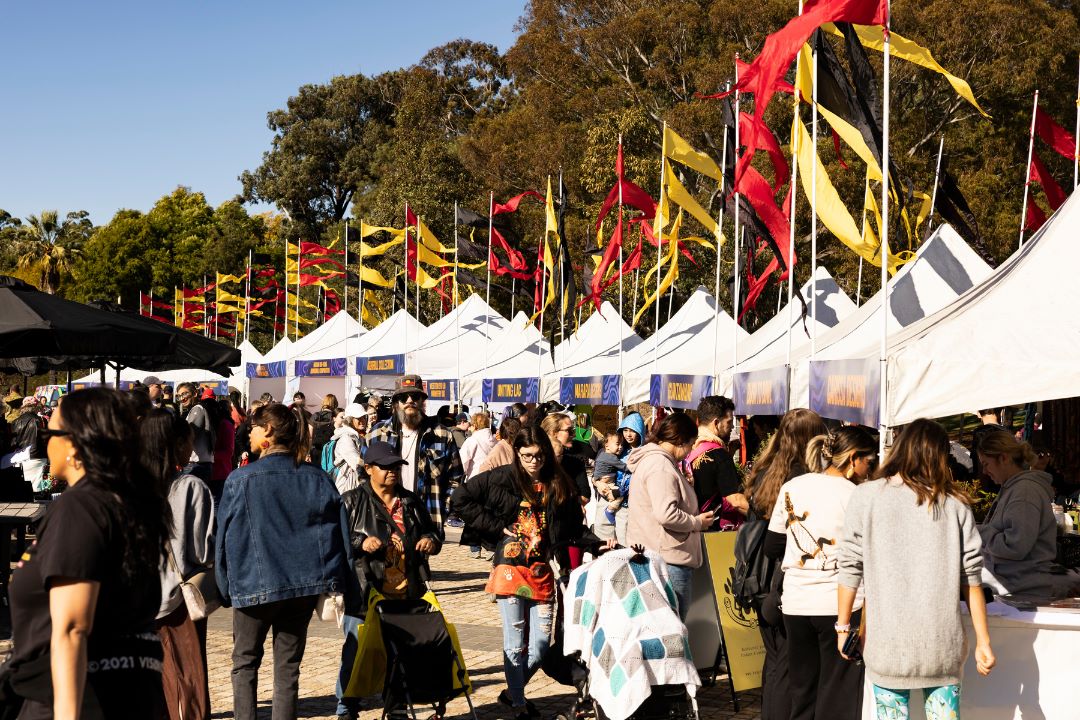
  • Council holds a number of community and civic events throughout the year relating to Aboriginal and Torres Strait Islander people including NAIDOC Week Celebrations and Sorry Day.

NAIDOC Week Celebrations

Parramatta Council holds a number of events and celebrations in NAIDOC Week (each July) to celebrate the history, culture and achievements of Aboriginal and Torres Strait Islander peoples.

NAIDOC originally stood for 'National Aborigines and Islanders Day Observance Committee'. This committee was once responsible for organising national activities during NAIDOC Week and its acronym has since become the name of the week itself.

Sorry Day

Council commemorates Sorry Day on 26 May each year as part of the Nationwide Sorry Day acknowledgements. This event is of particular significance to the area as the Stolen Generation began outside the Parramatta Town Hall in 1810 through the Assimilation Policy (1810-1825). Governor Lachlan Macquarie believed that it would be in the best interests of the nation to ‘civilise’ the native population. In doing so the Native Institute was established.

Aboriginal and Torres Strait Islander Communities in the Parramatta Local Government Area.

Statistical information on Parramatta’s Aboriginal & Torres Strait Islander communities, by suburb, is available by entering ‘Indigenous’ in the ethnicity section of the Community Atlas

Other Services / Agencies

Gandangara Land Council Link Up NSW
2/103 Moore Street
Liverpool 2170
Ph: (02) 9602 5280
5 Wallis St
Lawson 2783
Ph: 1800 624 332
NSW State Land Council Catchment Management Authority
Sydney Metropolitan
Argyle St, Parramatta
Ph: 8836 6000
10 Valentine St, Parramatta
Ph: 9895 7007
GILGAI NSW Police Headquarters
Aboriginal Coordination Unit
Aboriginal Centre
Ph: 9625 2852
1 Charles St, Parramatta
Ph: 8835 9130
LiveZilla Live Help